Issue #223: A Middle Eastern Condiment
Za’atar Is Misunderstood, You’ll Want to Drizzle This on Everything

While the Internet goes gaga over Chinese chili crisp and its Mexican cousin salsa macha—I’m doubling down on za’atar.
I have nothing against the garlicky, spicy, chunky chili oils that people are drizzling all over Instagram. I’ve made a few different versions myself and right now in my cupboard I have two chili crisps from Holy Tshili, one from Fly By Jing, and a salsa macha I recently brought back from Maizajo in Mexico City.
But the condiment that has captured my imagination of late is an herbaceous, nutty, slightly tangy drizzle based on za’atar that I find so hauntingly delicious, I wanted to share the recipe with you.
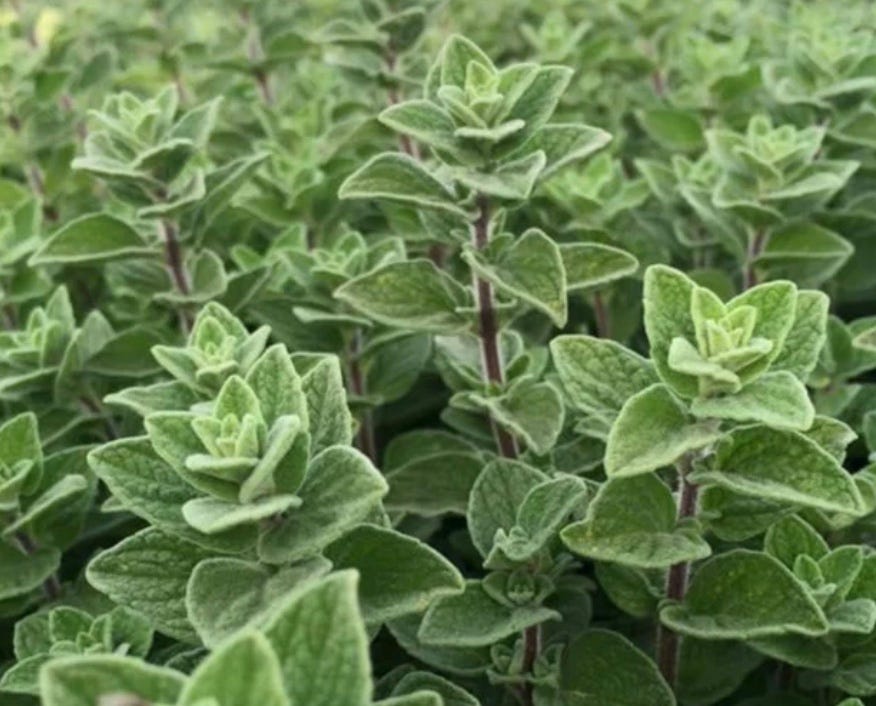
Like so much in the region, Za’atar is often misunderstood, and with good reason. The Arabic word refers both to an herb that grows wild in the Levant and to a blend of spices based on that herb that usually includes sumac, sesame, and salt. What’s more, several different wild herbs are colloquially called za’atar, though botanists generally accept Origanum syriacum, a relative of mint—sometimes mistakenly referred to as a hyssop—as true za’atar. Depending on where you are, Thymbra spicata and Satureja thymbra might also be called za’atar. I’m not sure if or how you’d know which you’ve got and I don’t think it necessarily matters.
Before you let this uncertainty frustrate you, remember that Mexican tarragon is a different herb from French tarragon and Mexican oregano is distinct from its European cousins. As the Latin names of the different za’atar plants suggest, you might best describe the flavor as a cross between oregano and thyme.
As for za’atar, the spice blend, there too, you’ll find variation. If you go back into my cupboard, you’ll find several different za’atar blends, a few from Israel that I either brought back or were given to me, plus a trio I purchased from a favorite shop in Dubai that were labeled Syrian, Palestinian, and Lebanese za’atar, each distinct. Certainly, every spice seller, perhaps every home, has its own za’atar blend. When I asked what made the three I purchased different, I was told the proportion of sumac and sesame. One imagines the za’atar herb harvested in each place—whichever plant it may be—might also vary in flavor from region to region, the way Italian oregano tastes different from Greek.
In fact, it was this surfeit of za’atar on my shelf that led me to look for something to do with it that would use up a significant amount. Usually, I just sprinkle it on roasted vegetables or grilled meats or I use it to granish various meze. Though I love it, such sprinkles don’t do much to deplete my stores. So, I made my first batch of this condiment. And then I made it again.
Same Name, Different Uses
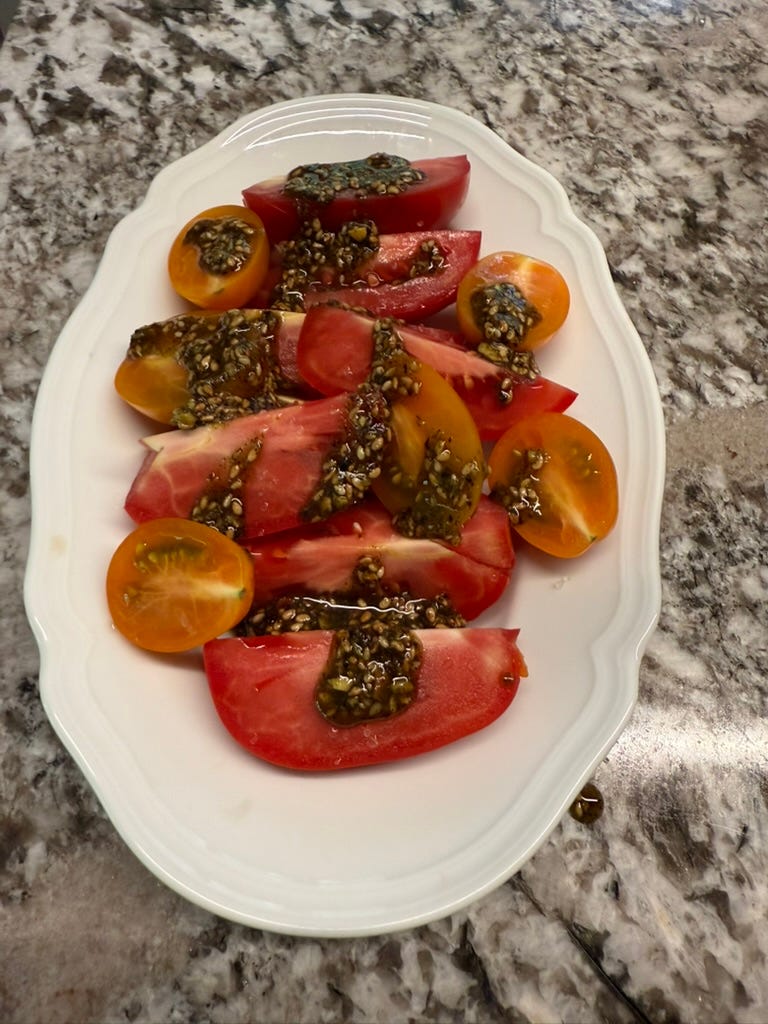
Futher complicating matters of nomenclature, I’ve heard people refer to this flavored oil simply as za’atar, as well. And since the predominant flavors are the same, I don’t think that’s necessarily wrong. You could use this oil just about any place that calls for a sprinkle of the spice.
To make it, you amplify the sumac and sesame seeds in the original za’atar blend by adding more of each, and then combine that with toasted nuts, spices, and extra-virgin olive oil. Let it sit for a few days for the flavors to infuse and develop. A sludge will form at the bottom, not unlike chili crisp. Mix it up and drizzle it on tomatoes, salads, meze, meats, and fish. Dip bread in it. Stir it into yogurt. Serve it with cottage cheese.
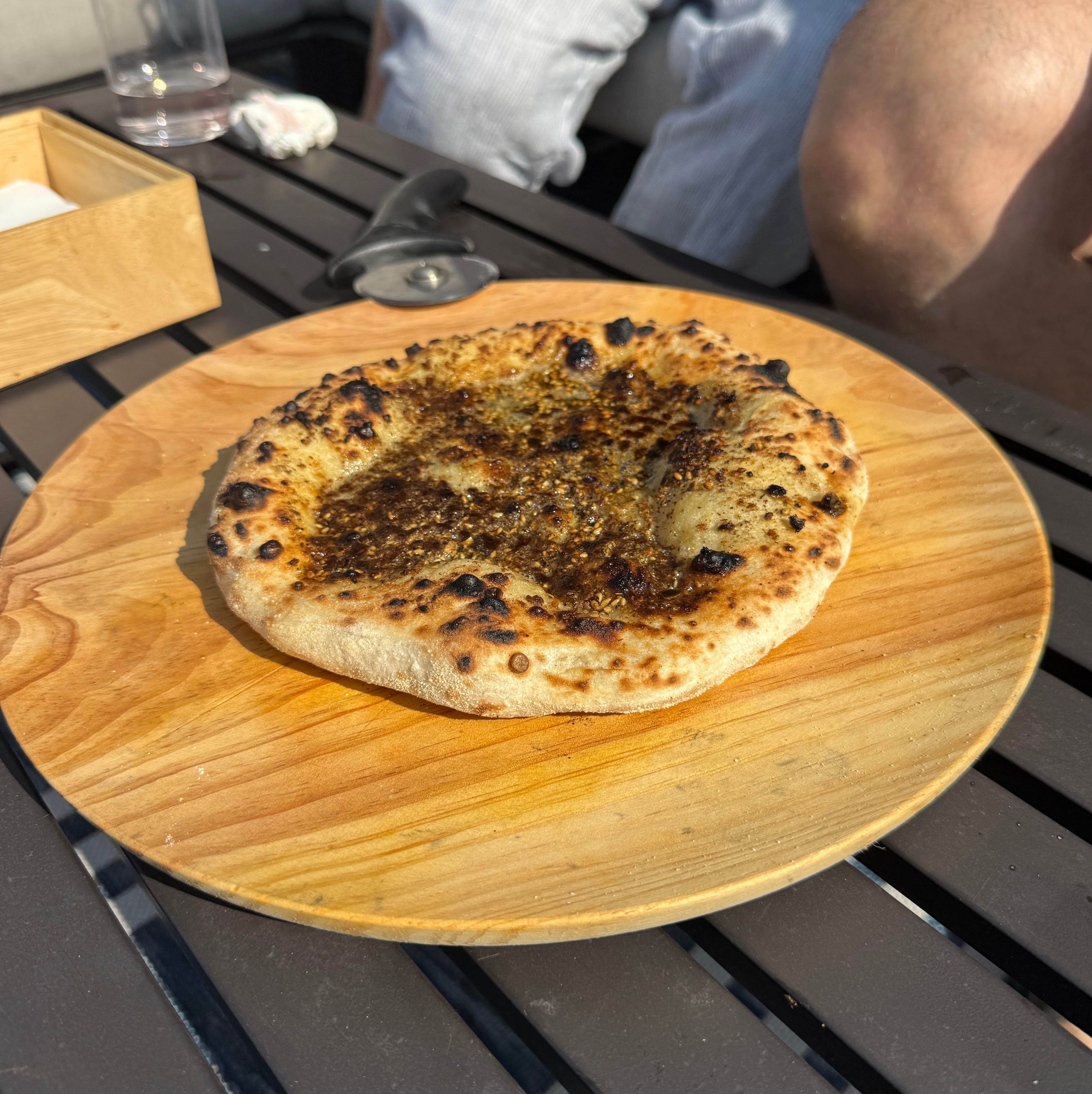
These days I’m playing a lot with a new pizza oven and this oil spread on pizza dough and baked until bubbly and browned is a new house favorite. You could also brush it on pitas and toast them. Get creative and share your ideas.
RECIPE: Za’atar Oil
Makes about 1 1/2 cups
1/4 cup shelled pistachios
1/4 cup walnut halves
2 tablespoons sesame seeds
1/2 cup za’atar (the spice blend)
2 teaspoons toasted ground cumin
2 teaspoons sumac
1/2 to 1 teaspoon Aleppo, espelette, Urfa, or pimentòn chili pepper, depending on your spice tolerance and what you’ve got on hand
1/2 teaspoon fine salt
3/4 cup extra-virgin olive oil
On a tray in a preheated 300°F. oven, toast the pistachios, walnuts, and sesame seeds. For the best, most even results, toast them each separately, consecutively, stirring occasionally until lightly golden brown and aromatic, between 6 and 8 minutes, depending. To be honest, though, to save time, I usually toast them in different sections of the same pan, trying to keep them discrete while they toast so I can remove them as they are done.
Once toasted, chop the pistachios and walnuts finely and combine with the toasted sesame seeds in a mixing bowl. Add the za’atar, sumac, Aleppo or other chili pepper, and salt, and mix well. Stir in the olive oil. Transfer to a jar. The za’atar oil will keep at room temperature for several weeks.
It’s impossible to write about a flavor so characteristic of the Middle East without hoping for an immediate end to the war, the return of the hostages, and the restoration of dignity to all in the region. Consider supporting World Central Kitchen or any of the organizations helping the victims and working for peace.
Great minds, Mitchell! I've been thinking a lot about the same thing. There's so much to say but one quick addition: Your za'atar topped pizza would be called mana'eesh in Lebanon and back when I lived there in the late 15th century it was sold every morning by street vendors along the Corniche looking over the Mediterranean. A fabulous breakfast treat!