Issue #236: Sweet Mango Pickle
An Elusive Recipe for an Indian Condiment, Some Thoughts on eCookbooks, My Upcoming Pop-Up in White River Junction

Author’s Note: After publishing this week’s newsletter, a concerned reader noted that she and many people are allergic to mango peel, which contains the compound urushiol, the same allergen found in poison ivy. If you have that allergy or worry anyone might, please peel your mangoes.
As I’ve noted before, Nate loves Indian food. Many things he doesn’t otherwise find palatable—lentils, beans, fish, even vegetables—I can get him to eat if I cook them in an Indian style.
Nate also loves India. Before we moved to New Hampshire, while he was between jobs, we took a three-week trip through India, which I wrote about in Issues #138, #139, and #140. It was an incredible experience, with a few of the challenges that traveling through India poses, but mostly with the sensory and spiritual overload that makes it worth the journey. Although at home I have to tone down the spice and keep breakfast on the sweet rather than savory side, during our entire trip to India Nate ate nothing but Indian food—breakfast, lunch, dinner, and snack, the last almost always consisting of spicy chili cheese toast.
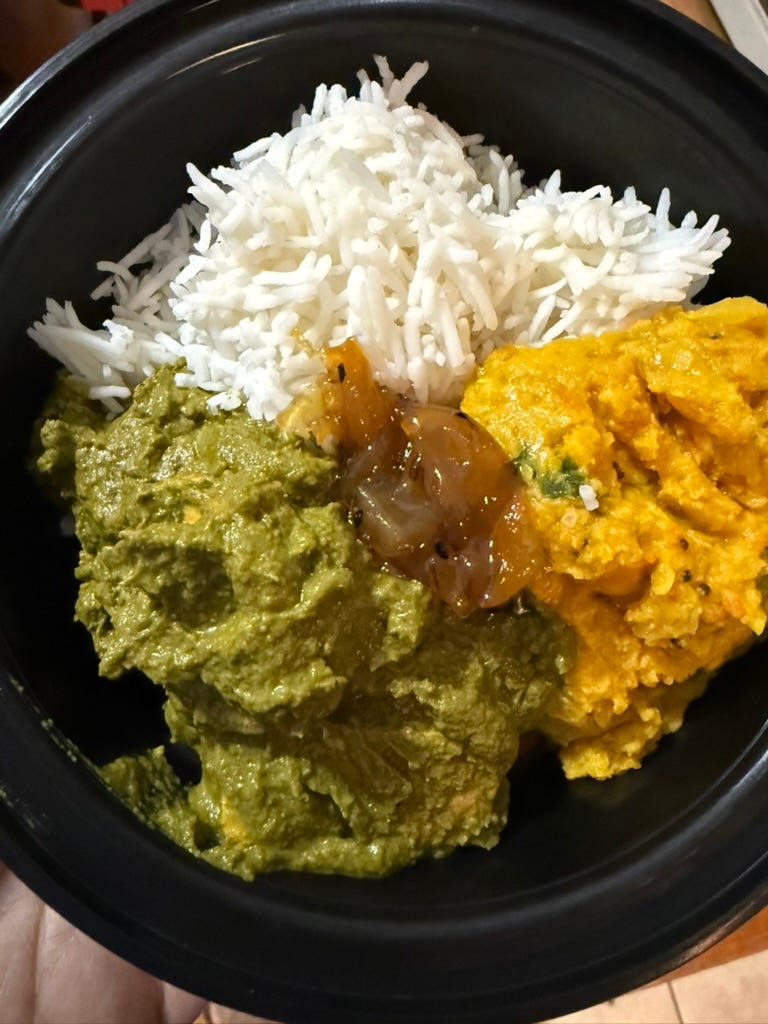
One of the reason’s Nate loves Indian food at home is I almost always serve it with a sweet mango chutney. This isn’t any mango chutney and it certainly isn’t Major Grey’s. No, our house mango chutney comes from only one source, Chandra, mother of our good friend Ashish, mother-in-law to his wife Nisha. Nothing compares.
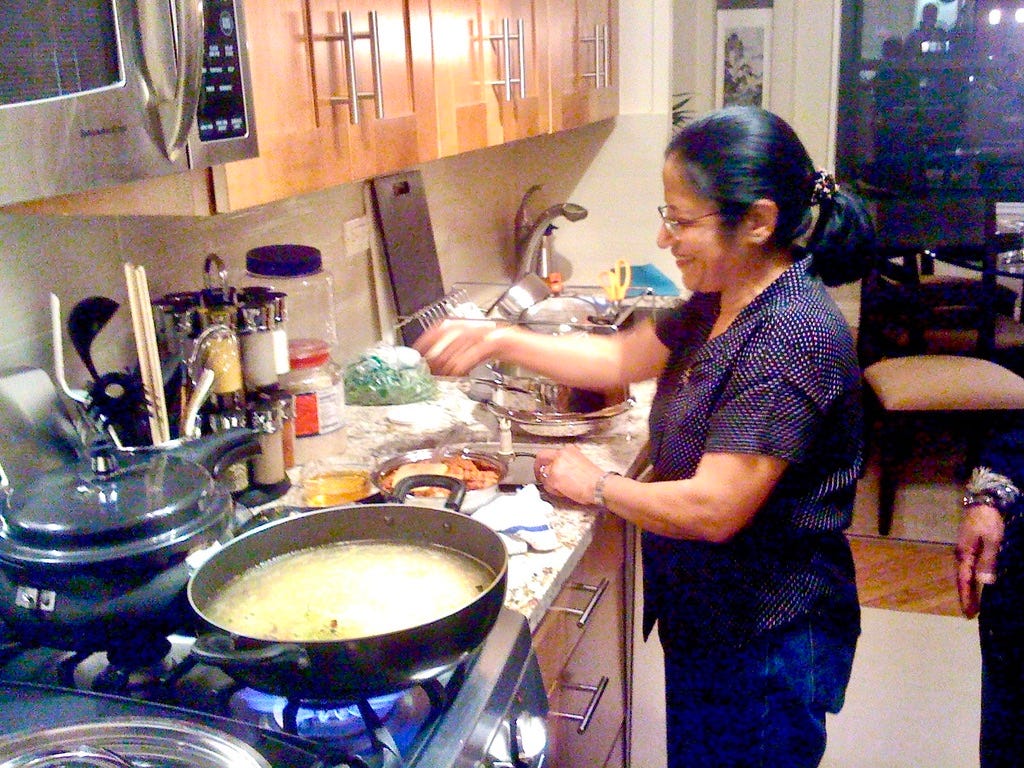
About 15 years ago I spent an afternoon cooking with Chandra. I was eager to learn how she made the elegant, subtly spiced Sindhi food she had prepared for us on several occasions. Together we made Sindhi pakoras, frying chickpea-battered vegetables not once, but twice into crisp shards. We braised fish in a luscious spinach sauce and prepared many other delicious dishes. A humble home cook, Chandra was surprised and a little embarrassed that I cared to learn what she did in the kitchen. Her food is exquisite.
But one thing we didn’t make that day was her sweet mango chutney. Though I’ve asked a couple of times for her recipe over the years, instead, every time we see Nisha and Ashish, including last summer when they came to New Hampshire with their son Nikhil to visit Dartmouth, they aways have a jar of Chandra’s magical mango chutney for us.
Do eCookbooks Really Exist?
The other day on a long bus ride, I finished a book I was reading on my iphone and began browsing the ebooks in my Apple library. There were a few cookbooks in there that I hardly remembered downloading—one on ice cream, another on Thai cuisine, and one on Asian pickles. Occasionally, when I see a $1.99 ebook sale, I’ll click on a couple of cookbooks. And then I promptly forget about them.
While I exclusively read novels and nonfiction on my iPhone, preferring the convenience of always having my books in my pocket and the ability to read at night while Nate sleeps without turning on a light, I find electronic cookbooks generally a waste of time. Sure, I scroll and Google most of my recipes online these days, but an electronic cookbook is like the worst of both worlds—intangible and unappetizing. Once you close the file, it ceases to exist.

I ought to know. I co-wrote an electronic book with celebrated chef Laurent Gras called My Provence that won two prestigious awards from the International Association of Culinary Professions (IACP) in 2013, their “New Media Award for Intriguing Use of Technology” and the “Judges Choice Cookbook Award.” It was big production and exciting project, for which we cooked and wrote and video-taped and photographed everything Laurent prepared in a studio in lower Manhattan over the course of several weeks. A hardcopy was never printed. And because My Provence doesn’t live in the material world, sometimes I even forget we wrote it.
Mango Pickle for My Pop-Up!
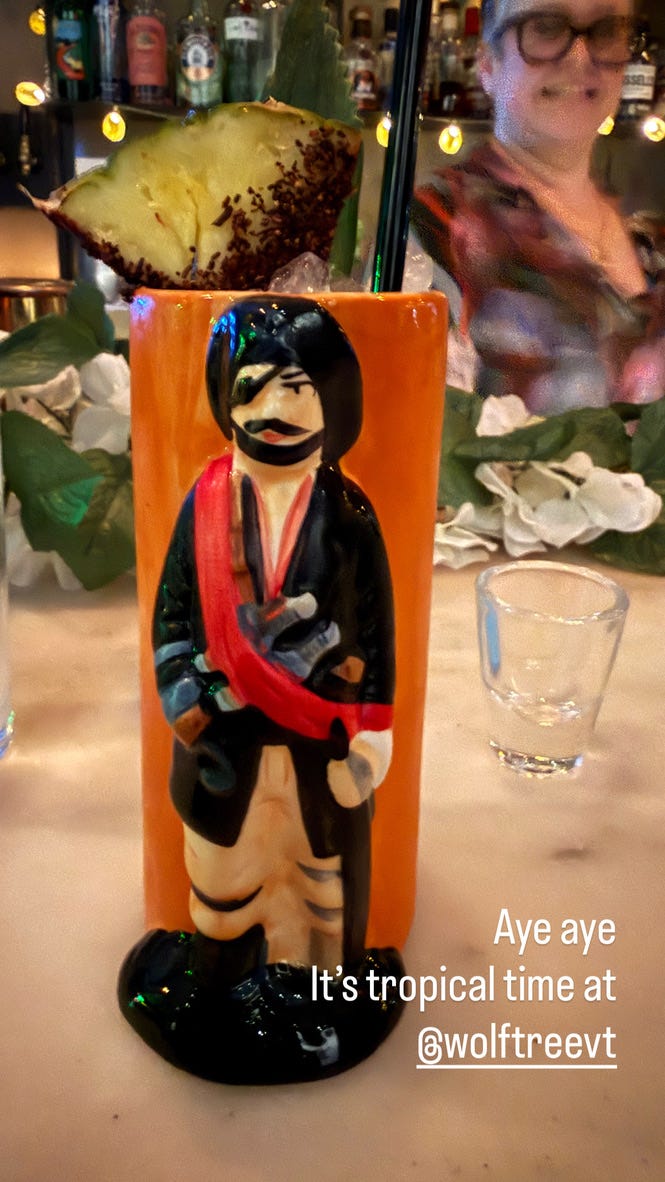
When I stumbled on that Asian Pickles ebook, I was in the process of planning the menu for an upcoming pop-up dinner I’m cooking at Wolf Tree, a cocktail bar in White River Junction, Vermont, just a few miles from our house. This year, Wolf Tree was nominated for a James Beard Foundation Award, and it’s become a favorite hangout for Nate and me. Most nights they don’t offer much food beyond a cheese and charctuerie board. But the cocktails are very fine. Occasionally they invite a chef to do a pop-up dinner and serve more substantial grub. Our friend, head bartender Jeanna, invited me to cook.
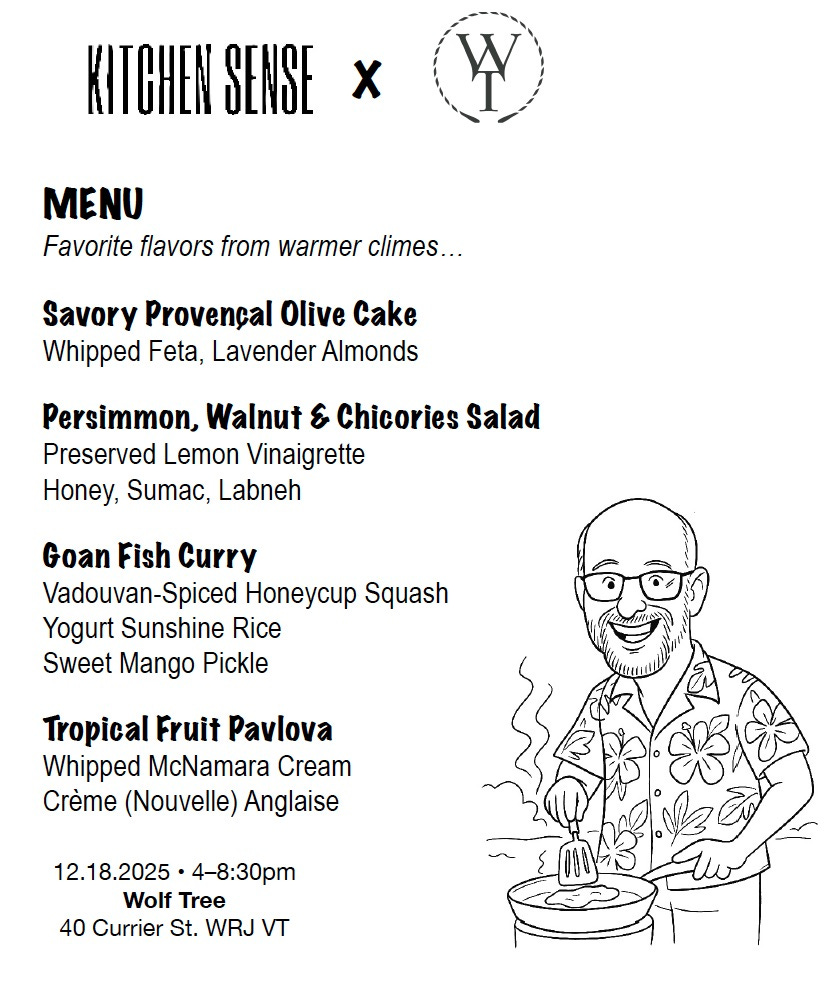
For December, Wolf Tree sports a tropical theme, an imaginary respite from the subzero temperatuers we’ve been experiencing these days. To align with that theme, I conceived of a menu of foods from a few favorite warmer places—Provence, Israel, Australia, and Goa, where on our Indian sojourn we sampled several versions of the classic fish curry I’ve been perfecting since our return. And what better accompaniment to that curry than a sweet mango chutney? Only, I would never consider parting with any of Chandra’s—Nate would kill me—so I set out to make my own.
Scanning the epages of Asian Pickles by Karen Solomon, I stumbled over a recipe for Sweet Mango Pickle that sounded particularly good to me. Although, it wasn’t quite like Chandra’s mango chutney, it had several seasonings that resonated and that seemed both authentic and delicious. Solomon advised not to peel the mango, which while not Chandra’s approach, was a detail that intrigued me. I had no idea you could eat the peel of mangoes. (And, in fact, I learned from a reader, many people are allergic to it, so feel free to leave it off.) And she advised letting the pickle sit out at room temperature for 24 hours to mature, another detail that I would enhance the flavor. I decided to give it a try.
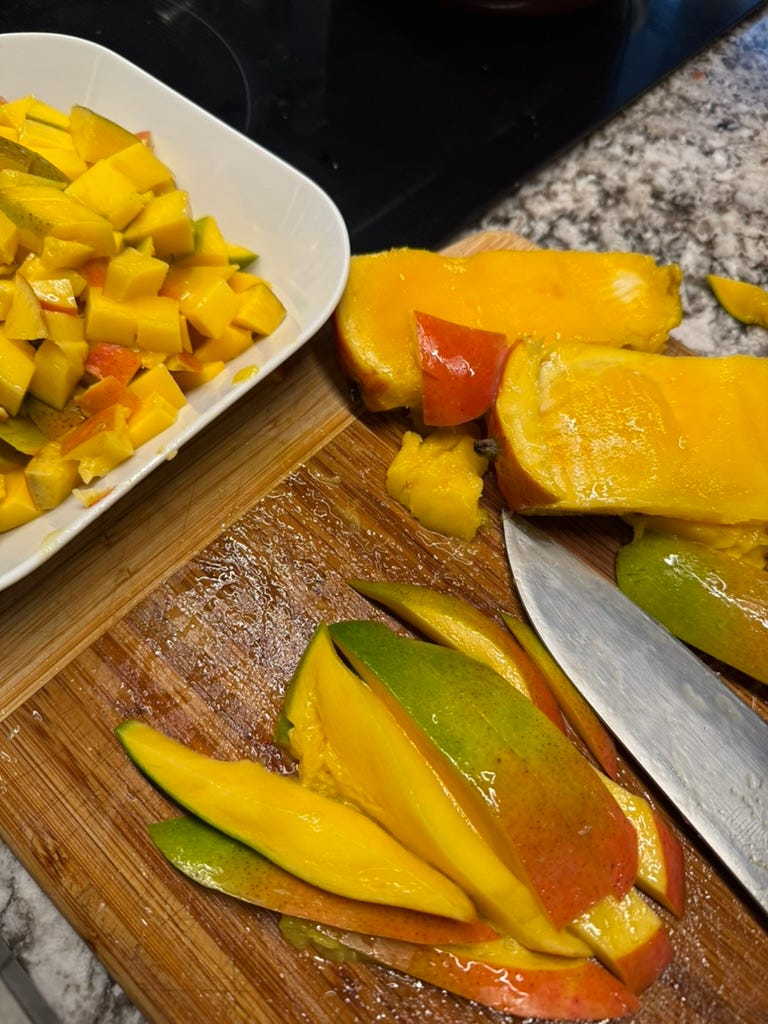
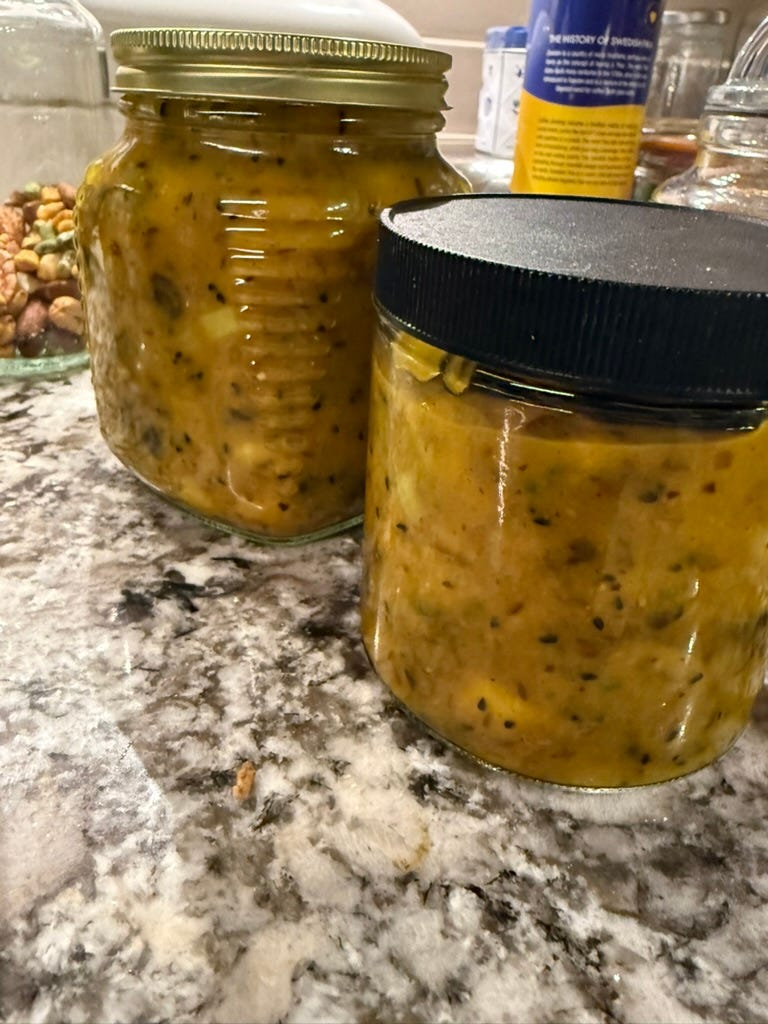
I made Solomon’s sweet mango pickle, with a little tweak here and there to try to emulate Chandra’s flavorings, adding some nigella seeds, for example, and a little more sugar, while keeping it fruit forward, as they say these days.
With mangos from the southern hemisphere available just about everywhere at the moment, even in snowy New Hampshire, I’d advise you to make this sweet mango pickle now. A batch gives you about 6 cups, a significant amount, but it will keep a year or so in the fridge, and if my consumption at lunch yesterday is any indication, it won’t last that long. It’s so good.
And if you want to see how it tastes or compare yours to mine, and you happen to live anywhere near the Upper Valley, come to my popup next Thursday, December 18, at Wolf Tree in White River Junction, Vermont, starting at 4 pm. Hope to see you there. You’ll just have to imagine how Chandra’s chutney compares.
RECIPE: Sweet Mango Pickle
Makes about 6 cups
1/4 cup peanut or vegetable oil
2 tablespoons cumin seeds
1 tablespoon fenugreek seeds
1 tablespoon brown mustard seeds
2 teaspoons red chili flakes, such as Kashmiri, Espelette, or Calabrian
1 to 2 small green Indian chilies, depending on your spice tolerance, or a serrano or jalapeño, seeded and minced
2 large, ripe mangos (about 2 pounds), washed and dried, unpeeled or peeled, in case you know anyone with an allergy, cut into 1/2-inch dice (about 5 cups)
1 medium yellow onion, peeled and cut into 1/4-inch dice
1 cup dark or light raisins
1 3-inch piece ginger, finely grated (no need to peel)
1 tablespoon kosher salt
1 tablespoon nigella seeds
2 teaspoons asafetida (aka hing)
2 teaspoons ground turmeric
1/3 cup light brown sugar
1/2 cup distilled white vinegar
In a large, heavy skillet with deep sides, heat the oil over medium heat. Add the cumin, fenugreek, and mustard seeds, along with the chili flakes, and cook, stirring frequently, until brown and fragrant, about 6 minutes. Add the green chili and cook 30 seconds more. Add the diced mango, onion, raisins, and ginger and cook, stirring often, until the mixture begins to soften and come together, about 5 minutes more. Add the salt, nigella seeds, asafetida, turmeric, sugar, and vinegar. Turn off the heat and stir thoroughly to dissolve the sugar and combine. Pack the pickle into clean glass jars. Cover and let sit on the counter for 24 hours before refrigerating. The pickle will keep up to a year in the fridge.
Wish I could get over to WRJ, or better yet to your house to do a comparison. What a lush and luscious idea, mango pickle--I can imagine it on a grilled cheese sandwich, would that be kosher or not?