Issue #261: Madeleines
Remembrance of Things Cookie (That’s Actually a Cake)

In high school my friend Sharla and I had the idea to create a small business that would sell madeleines from a cart in downtown Toronto. It was more than an idea—we researched permits, enumerated the pros and cons of various street corners, her father drew up plans.
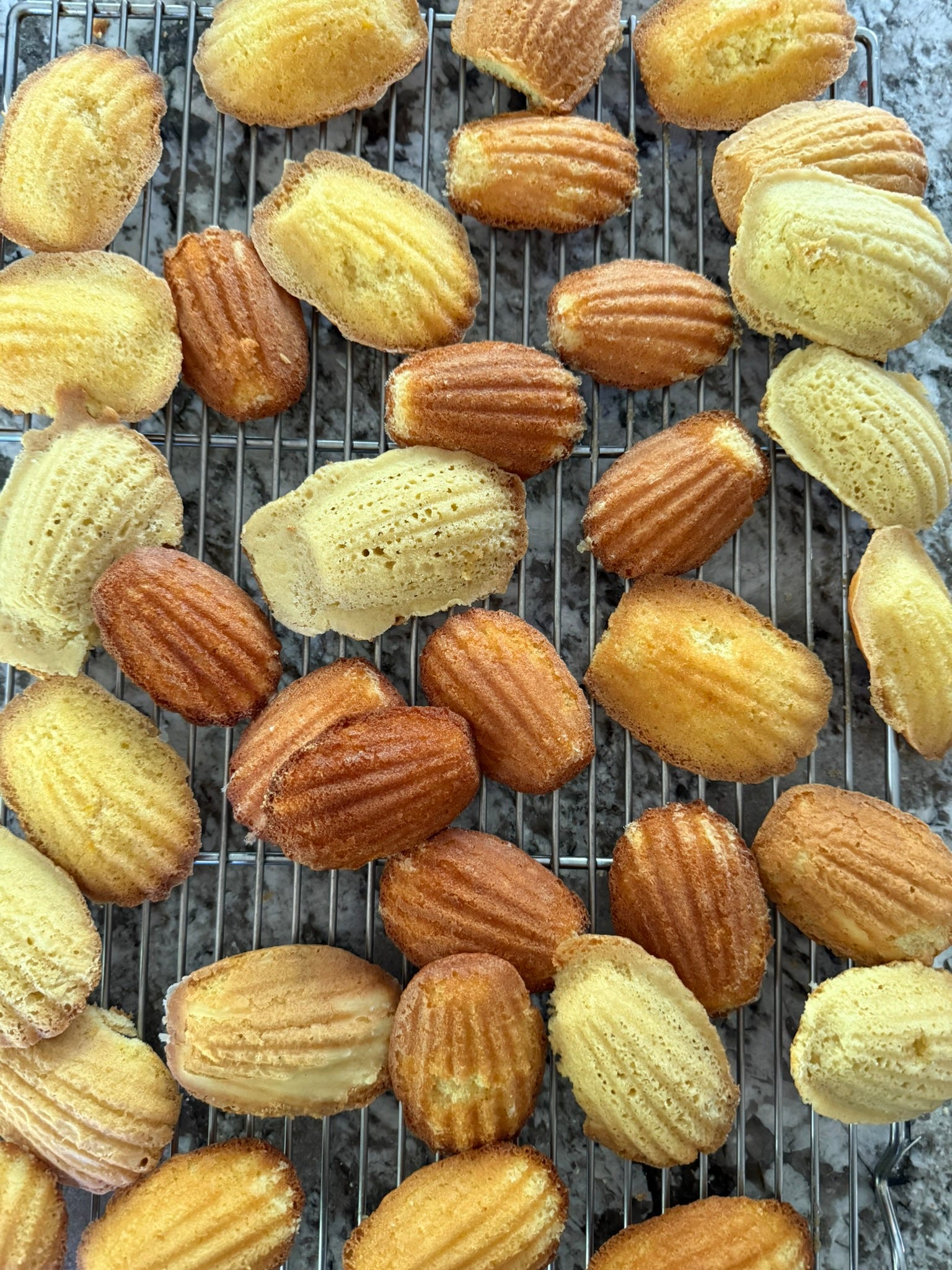
Although at one point we were working toward The Tart Cart—an idea whose rhyming name was more appealing than the thought of rolling out all that dough—we settled on the madeleine as a simpler, more iconic treat with literary gravitas and broad appeal.
I’d already had a small business making chicken soup in bulk for the butcher shop where I worked the counter two days a week. They’d give me boxes of frozen chicken bones sawed into cubes small enough to fit in my pots. I’d simmer between 24 and 48 liters of chicken soup for hours every week before straining and bottling it in our small apartment kitchen. The smell of chicken soup and dill permeated my clothes and my dreams.
A madeleine business held a different appeal.
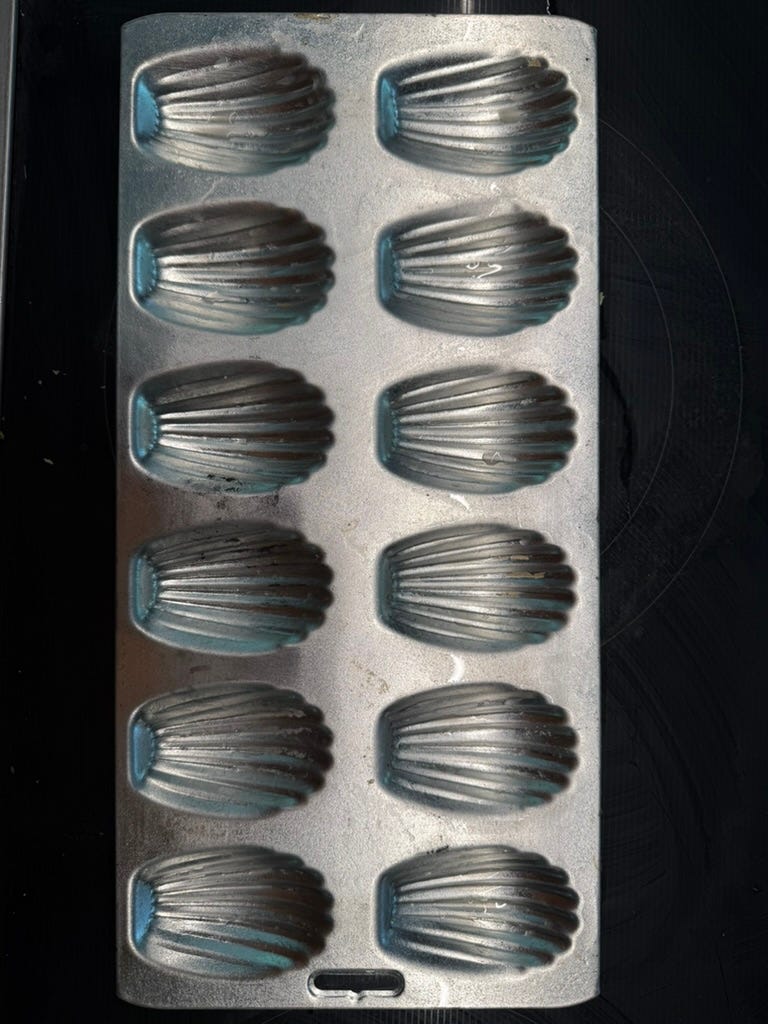
Proustian connotations aside, I was rather obsessed with the buttery little cakes in their scallop-shell form. I had made Julia Child’s recipe for madeleines a couple of times before I got to high school. In 11th grade I hosted a dessert party for my friends in the communal party room in our apartment building that I called “A Confection Affection.” I made all kinds of sweets for my classmates, including an assortment of madeleines.
I hadn’t yet spent my college junior year abroad in Paris, where I would often choose a madeleine to supplement the croissants and other baked goods I bought at my neighborhood pâtisserie. It was there that I discovered my love for croissant aux amandes fouré and flan pâtissier and where I learned how a fresh-baked madeleine ought to be. But that didn’t stop me from also stocking up on bags of cheap commercial madeleines from the grocery store with their consistently stale but nevertheless buttery texture and pronounced vanillin flavor that I found particularly addictive.
Senior year, back in Ithaca, New York, at Cornell’s Hotel School, I was part of a small team of students charged with producing a late-night dessert/cocktail party for the hundreds of alumnae and industry leaders who come to campus each year for the Hotel Ezra Cornell celebration—a student-run bacchanal meant to show off your skills and help you land a job. The theme of our party was Willy Wonka and the Chocolate Factory. I oversaw culinary production, of course, which included a gross of fresh-baked madeleines carried by servers dressed as orange-faced Oompa Loompas to a ginormous chocolate dunking station.
In the early 1990s, when I moved to New York City after college and time spent cooking in Italy, we were at peak madeleine. It’s hard to convey the excitement of the arrival of a neatly folded napkin full of miniature madeleines hot out of the oven at the end of my first meal at Daniel, the opening of which in 1993 marked a turning point in New York’s dining scene. The madeleines were his signature lagniappe for special guests. They went viral before social media had been invented and that term had been coined.
I was racked with credit card and student loan debt, earning next to nothing editing and writing for an industry food magazine, sharing an apartment with two roommates. But Daniel Boulud and I had met at Cornell, when, as chef of Le Cirque, he came to do a guest-chef dinner as part of one of my classes. Later that year, he invited me into the kitchen for a couple of days during spring break. A couple of years after that, when he opened his own place on East 76th Street, he invited me and some friends to experience it. The entire meal was over the top and those madeleines were magical. I ate a dozen.
A few months ago I saved an Instagram recipe for pandan madeleines, which appealed both because I love the flavor of pandan in sweets and because I had a bottle of pandan extract I’d yet to open. As the algorithm would have it, one recipe saved begat a hundred more and I kept clicking on variations of madeleines to try.
Last month, while returning home from Paris, I pocketed a handful of individually wrapped madeleines from the Air France lounge at Aéroport Charles de Gaulle. Hardly noteworthy, their texture and flavor nevertheless immediately brought me back to my junior year in Paris. Proust was onto something.
Until this week, it had been years since I’d dusted off my madeleine plaque and made a batch of these delicate, buttery little cakes that for some reason fall into the category of cookie—not unlike the iconic New York black and white cookie, which is also really a cake. Monday I started baking.
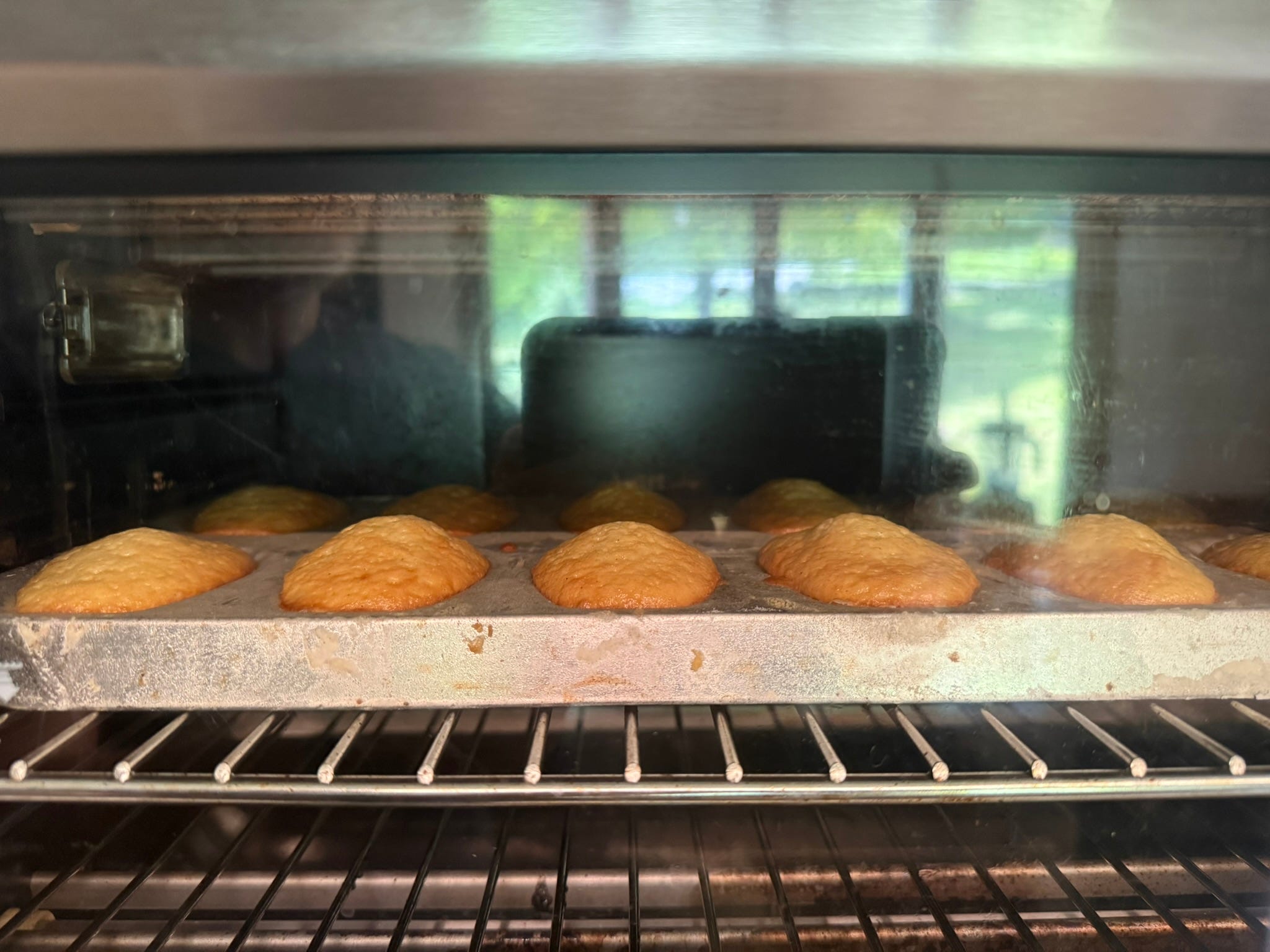
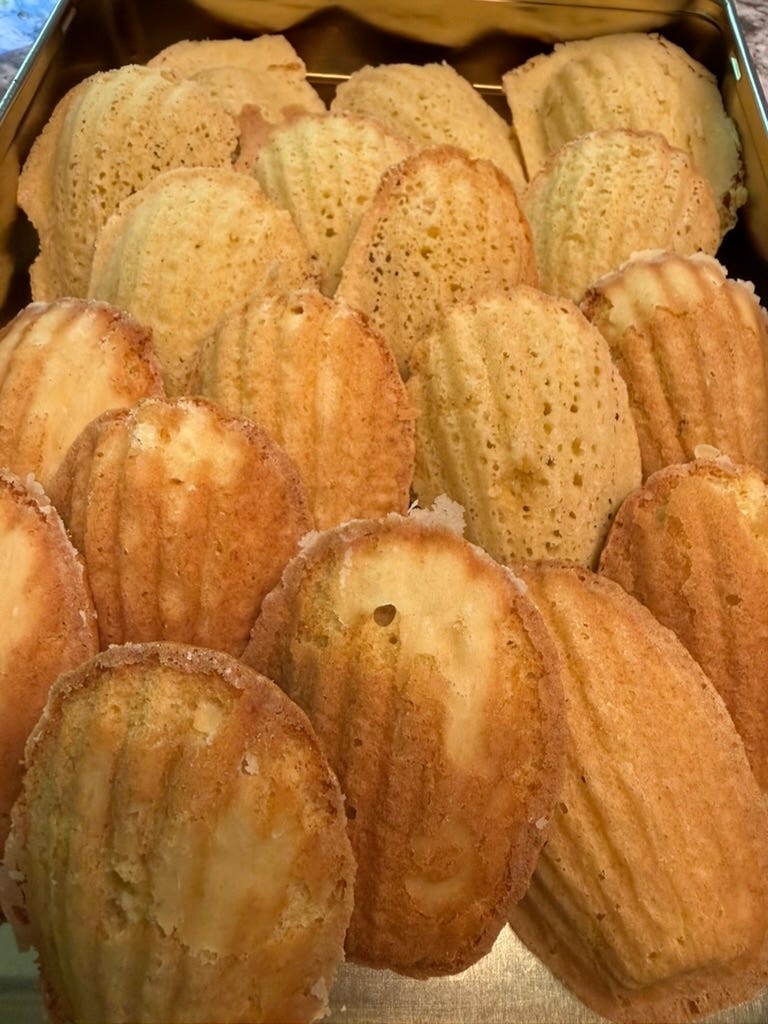
I tweaked a few recipes to come up with one I liked best, shared below. You likely already have all the ingredients you need (except if you want to flavor them with pandan). But technique is key. If you want your madeleines to display the signature hump, you need to chill and then freeze the batter before you bake them. In my opinion, it’s purely an aesthetic consideration. Madeleines that you bake right away come out flat but delicious.
There are two other considerations. The first is the need to beat the eggs and sugar sufficiently to aerate the batter. Madeleines are really a sponge cake, more génoise than gingersnap. The air provides lift. An electric mixer is a must. Finally, in order to ensure they come out of the pan in one piece, it’s essential to generously butter and flour each mold. I’ve tried a couple of different approaches, including making a “magic pan release” I’ve been curious about for years (equal parts shortening, oil, and flour). But nothing worked as well as good old butter (and plenty of it) and flour.
RECIPE: Madeleines
Makes 32 madeleines
10 tablespoons unsalted butter
4 teaspoons honey
1/2 cup white sugar
2 tablespoons light brown sugar
Zest of 1 lemon
3 large eggs
1 teaspoon vanilla paste or extract, or pandan extract
1/2 teaspoon fine sea salt
1 cup all-purpose flour
1 teaspoon baking powder
Soft butter and flour for the pan
In a small saucepan combine the butter and honey and set over medium heat to melt. Cool completely.
In the bowl of an electric stand mixer, combine the white and brown sugars. Add the lemon zest and, using your hands and fingertips, rub the zest into the sugar until the oils of the zest have released into the sugar. The mixture should begin to take on the texture of wet sand. Add the eggs, set the bowl in the mixer fitted with a whip attachment, and beat on high until thick and light, about 10 minutes. If necessary, stop occasionally to scrape down the sides of the bowl. The mixture should be pale yellow and the texture of pancake batter, or what’s called “ribbon stage.”
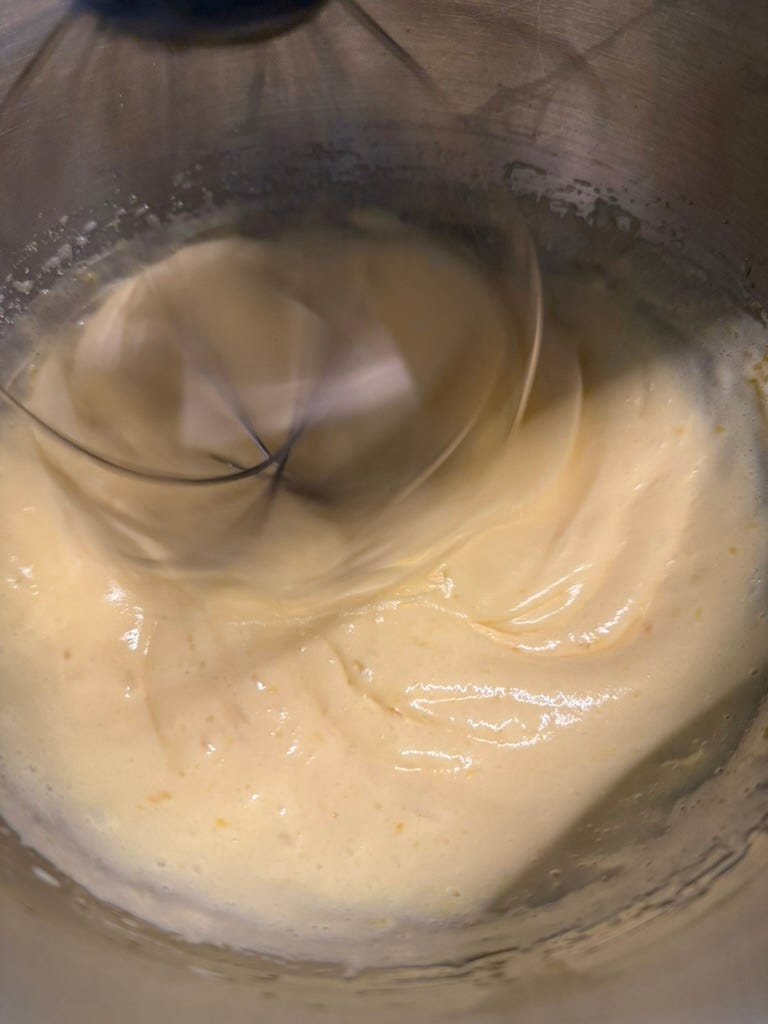
While continuing to beat, pour the cooled butter and honey into the egg and sugar mixture in a slow, steady stream. Add the vanilla or pandan flavoring and salt and beat to combine. Remove the mixture from the mixer. Sift in the flour and baking powder, and using a rubber spatula, fold in the flour until none is visible, being careful not to deflate. Place the batter in the refrigerate to chill for 2 hours or more.
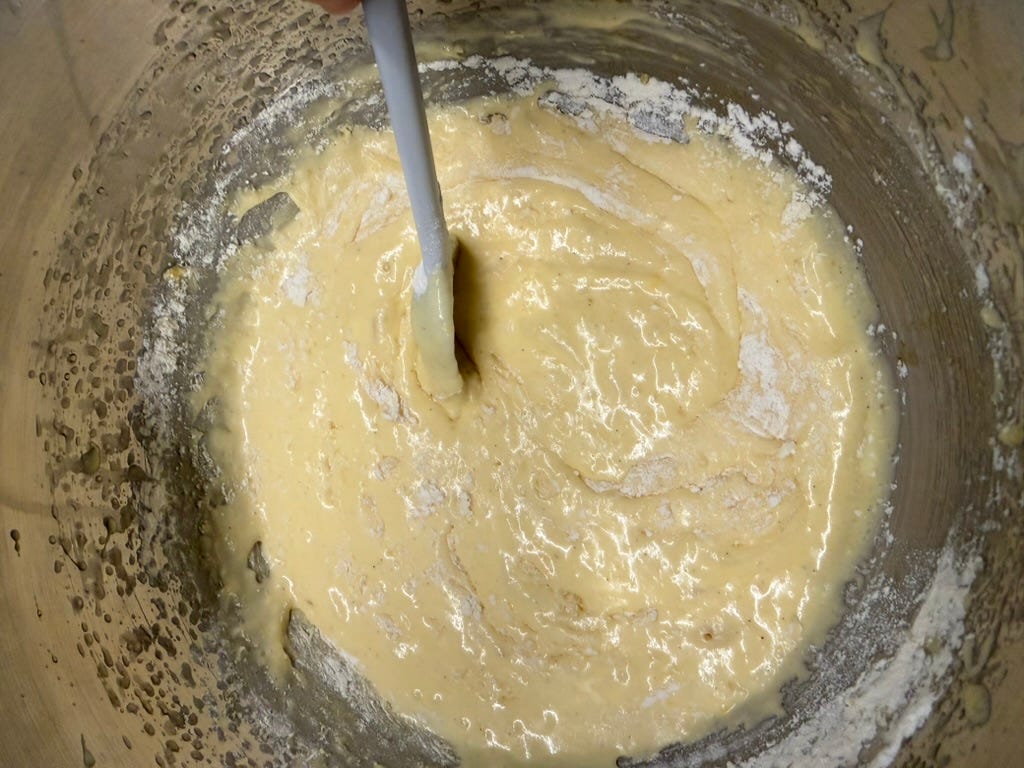
Using a paper towel and a generous amount of soft butter, butter each indentation in the madeleine plaque. Add a spoonful of all-purpose flour to each indentation and, while holding it over the sink, tap and tilt the pan to coat well with flour. Invert the pan in the sink and tap to remove excess flour. The pan should be well coated.
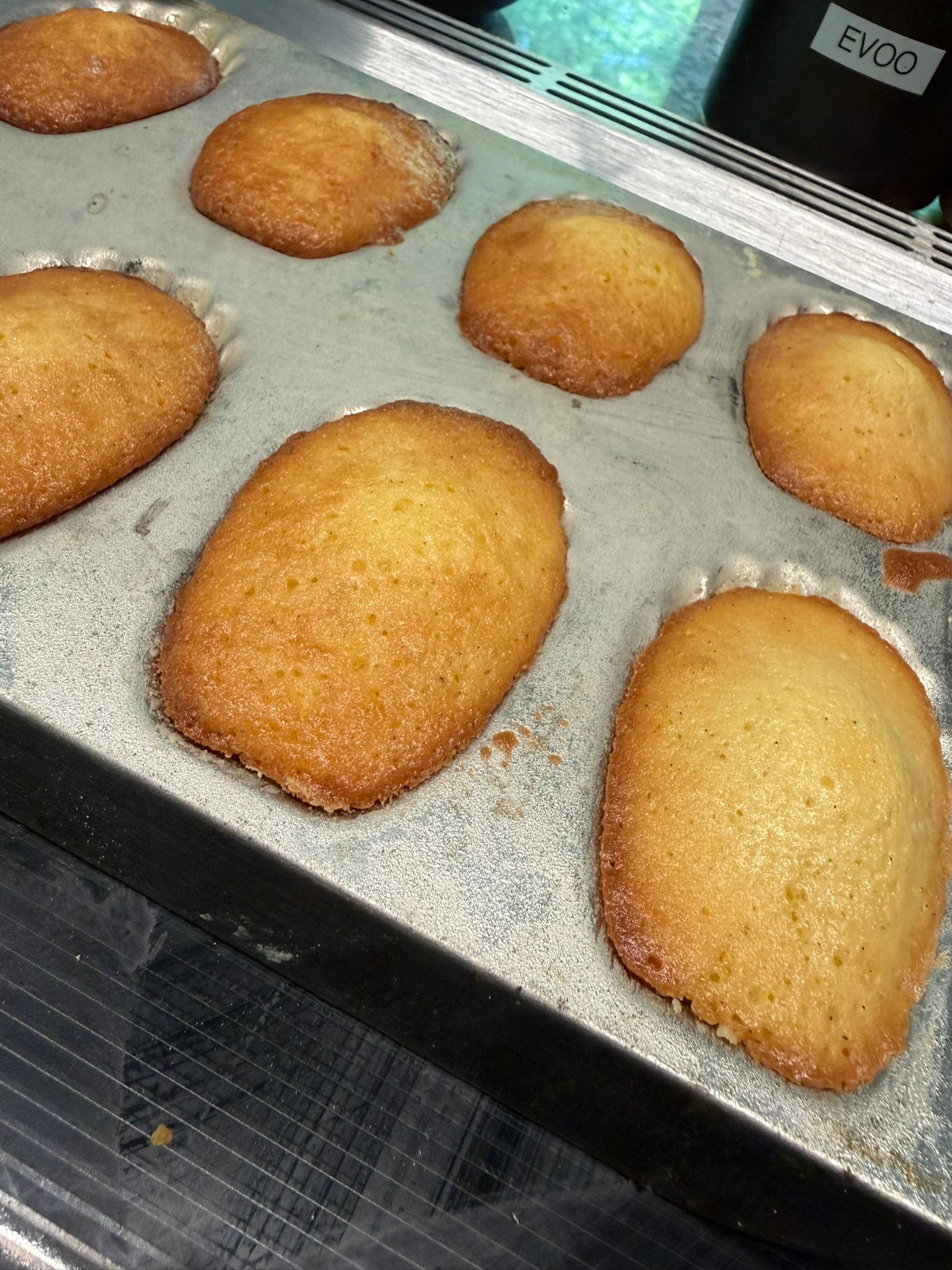
Preheat the oven to 375°F. Using a soup spoon, scoop a generous tablespoon of the chilled batter into a mound in the center of each madeleine mold. When all twelve are filled, place the mold in the freezer for at least 30 minutes. Place the frozen pan in the hot oven and bake for 12 to 14 minutes, until the batter has spread, risen to form a nice hump, and browned. Remove from the oven and let cool in the pan on a wire rack for five minutes or so. Invert the pan over the rack and forcefully tap the edges on the counter to release the madeleines.
Enjoy warm or allow to cool completely before storing in an airtight container for up to 3 days. Alternately, you can freeze them on a tray individually until firm, and then transfer to a resealable plastic bag to keep frozen for up to 3 months.
Excellent recipe! Thank you!
My favorite small *easy* delicious pastry!