Issue #263: Vichyssoise
Last Chance to Nosh, A Chilled Soup with a French Accent

We are just a few days out from The Great Nosh, the unique summer picnic and food festival I’ve helped bring to life. An exciting new collab has been added to the line up, LEV x Oneg Heimishe Bakery, which is going take Oneg’s iconic chocolate babka from Old World to New World heights. And we’ve released a few more tickets. If you are in the NYC area, you love great food and picnics, and you want to spend a memorable day on Governors Island relaxing, eating, playing dancing, we’d love you to join us. —Mitchell

Although it is still only June, last week in New Hampshire the mercury rose above 90°F. Apparently, with the humidex, it felt as though we hit 100°F. The weather called for chilled soup.
In the fridge I had a couple of late-winter leeks and some cream from our local dairy, so I decided to make Vichyssoise.
Although this chilled potato leek soup has become a cliché of pretentious French food—the Pouilly-Fuissé of soup—it is actually an American invention, created in New York at the Ritz-Carlton by the hotel’s French chef Louis Diat in 1917. It has nothing to do with Vichy; the name was made up. Potato leek soup was nothing new, to be sure, but enriching it with cream and serving it chilled in the upscale dining room of a luxury hotel was a revelation. At its roots, it’s a simple, homey potage parmentier.
Key to achieving the right silken texture is using a potato that’s low in starch. Make the wrong choice and it can easily end up gluey or gloppy. Newly harvested potatoes, Red Bliss, or other waxy potatoes are best. If you can’t find the perfect low-starch potato, you can cube what you’ve got and rinse in several changes of cold water to remove excess starch before cooking, which will help.
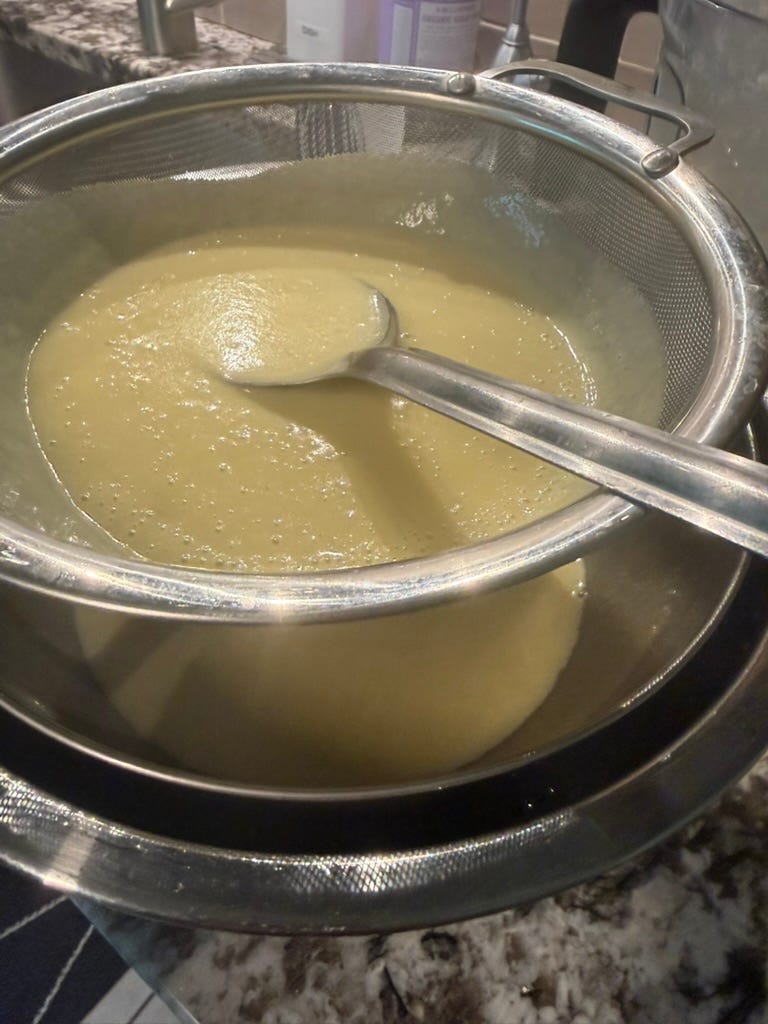
The step that takes the soup outside its humble beginnings is puréeing it. I have a powerful Vitamix blender that did the job so well, when I strained the soup through a fine mesh sieve, virtually nothing was left behind. Remember to remove the bay leaf first. A food processor or immersion blender, will also do the trick. Pass it through a strainer, just in case.
The soup should be chilled at least four hours and preferably overnight before serving. I wanted to serve mine sooner than that, so I set a bowl within a bowl of ice and stirred the soup continuously to bring the temperature down more quickly. It’s important to taste and adjust the seasoning once the soup is cold, as flavors hit differently at different temperatures. The texture will also change as it chills. Use additional stock or cream to loosen it up, if necessary, and adjust the seasoning again.
Nate, who is generally not a soup lover, especially not the hot, chunky variety, declared this his favorite kind of soup: cold and smooth.
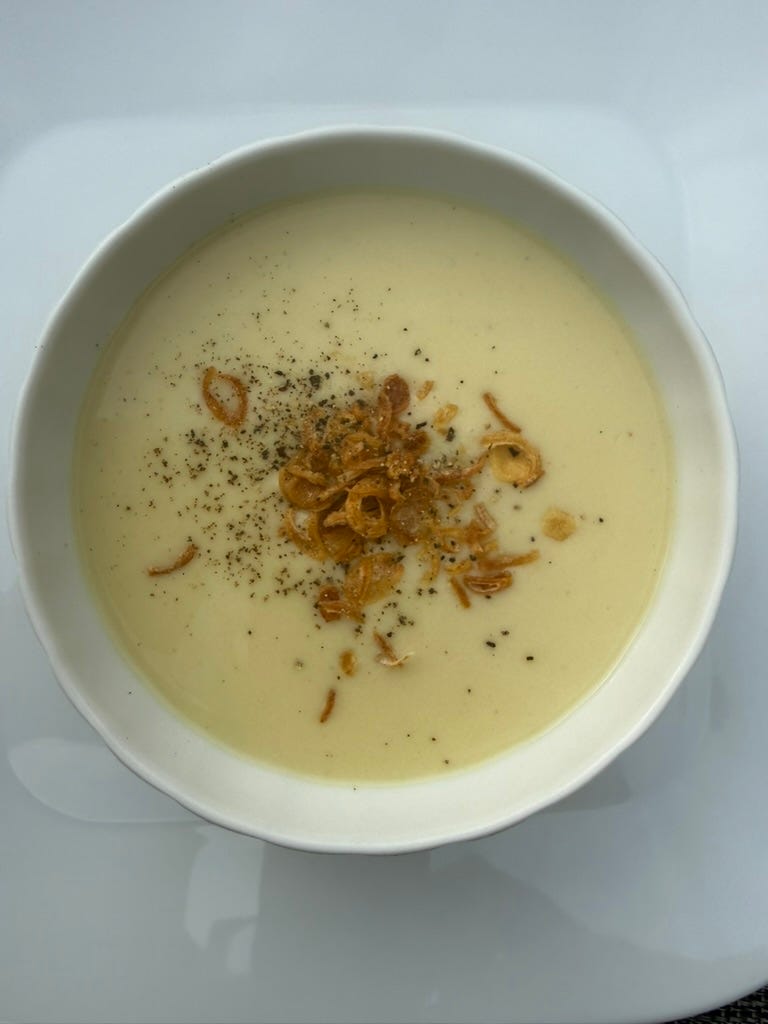
I recommend you chill the bowls you will use to serve. As long as you are going for a pretentious soup on a hot day, why not go all the way? I garnished my vichyssoise with crisp fried shallots—I buy them in Chinatown and keep them in the freezer for exactly this kind of thing—and a grind of black pepper. Chopped chives, chervil, or other fresh herbs and some freshly ground nutmeg would also be nice. Bon appétit.
RECIPE: Vichyssoise
Serves 6
4 tablespoons unsalted butter
2 leeks, white and light green parts only, cleaned and diced
1 large shallot, thinly sliced
Pinch salt
1/2 cup dry white wine
4 medium waxy (low-starch) potatoes (about 1 1/2 pounds)
4 cups chicken or vegetable stock, plus more to adjust finished texture
1 bay leaf
1 cup heavy cream
2 tablespoons Dijon mustard
Dash Worcestershire sauce
Freshly grated nutmeg
Fried shallots or chopped fresh herbs, for garnish
Freshly ground black pepper or nutmeg, for garnish
In a medium saucepan, heat the butter over medium-high heat to melt. Add the leeks and shallot along with a pinch of salt and sweat to soften without coloring. Add the white wine, bring to a boil, and let evaporate until almost dry. Add the potatoes, stock, and bay leaf, and bring to a boil. Reduce the heat to a simmer, set a cover ajar, and cook until the potatoes are soft, about 20 minutes.
Remove the bay leaf. Transfer this mixture to a blender (or use an immersion blender), and purée until smooth. Add the heavy cream, Dijon mustard, Worcestershire, and nutmeg and blend again. Pass through a fine mesh strainer back into the saucepan. Bring to a simmer. Adjust the texture with additional stock if necessary, and adjust the seasoning with salt. Transfer to a bowl or storage container and chill at least 4 hours or overnight. Taste and adjust the seasoning and texture again. Serve in chilled bowls garnished with fried shallots or chopped herbs and a grind of black pepper or nutmeg.
.