Issue #264: Pastrami
A Romanian Delicacy Adopted by NYC That's Popular at a Nosh and Perfect for a Picnic

I’m just home after a week in New York City that culminated with The Great Nosh, a picnic-cum-food-festival I helped the Jewish Food Society launch last year. More than either a picnic or a food festival, The Great Nosh is a movement to celebrate Jewish food and culture in a way that is inclusive, diverse, and fun. Sunday was our second annual Nosh, for which more than 4,000 people gathered on Governors Island to eat, lounge, craft, dance, celebrate and otherwise be in community. Food is the focus.
Central to the theme are cross-cultural chef collabs curated to represent the intersection of communities that is unique to New York City. For the second year in a row, one of the most popular featured Katz’s Delicatessen, the 138-year-old institution on Manhattan’s Lower East Side. This year, slices of their famous spiced, smoked, and steamed pastrami found their way onto heirloom corn tortillas along with habanero and avocado salsas and half-sour pickles escabeche as a collab with Santo Taco, a trendy New York taqueria.
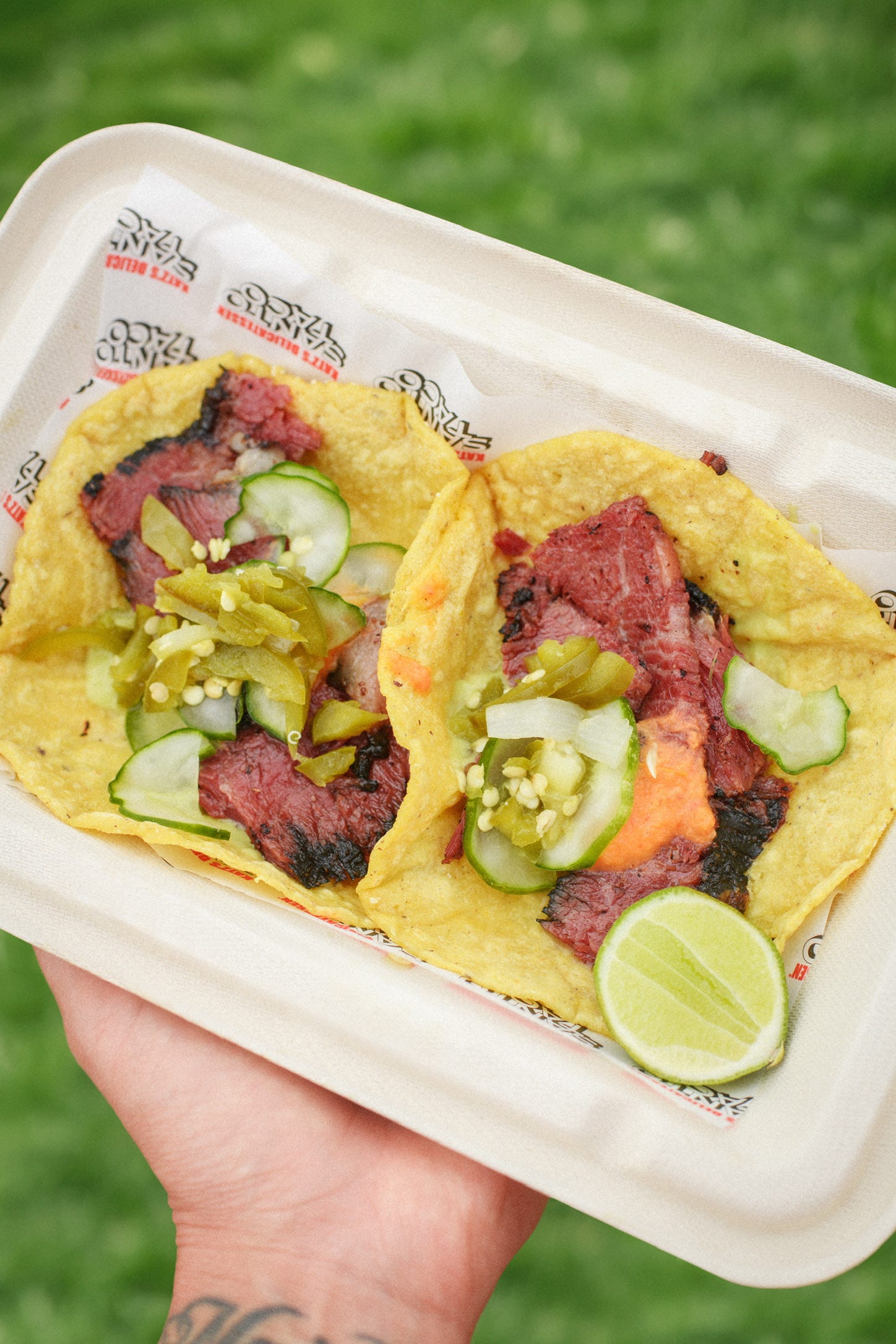
That taco wasn’t the only pastrami I ate last week.
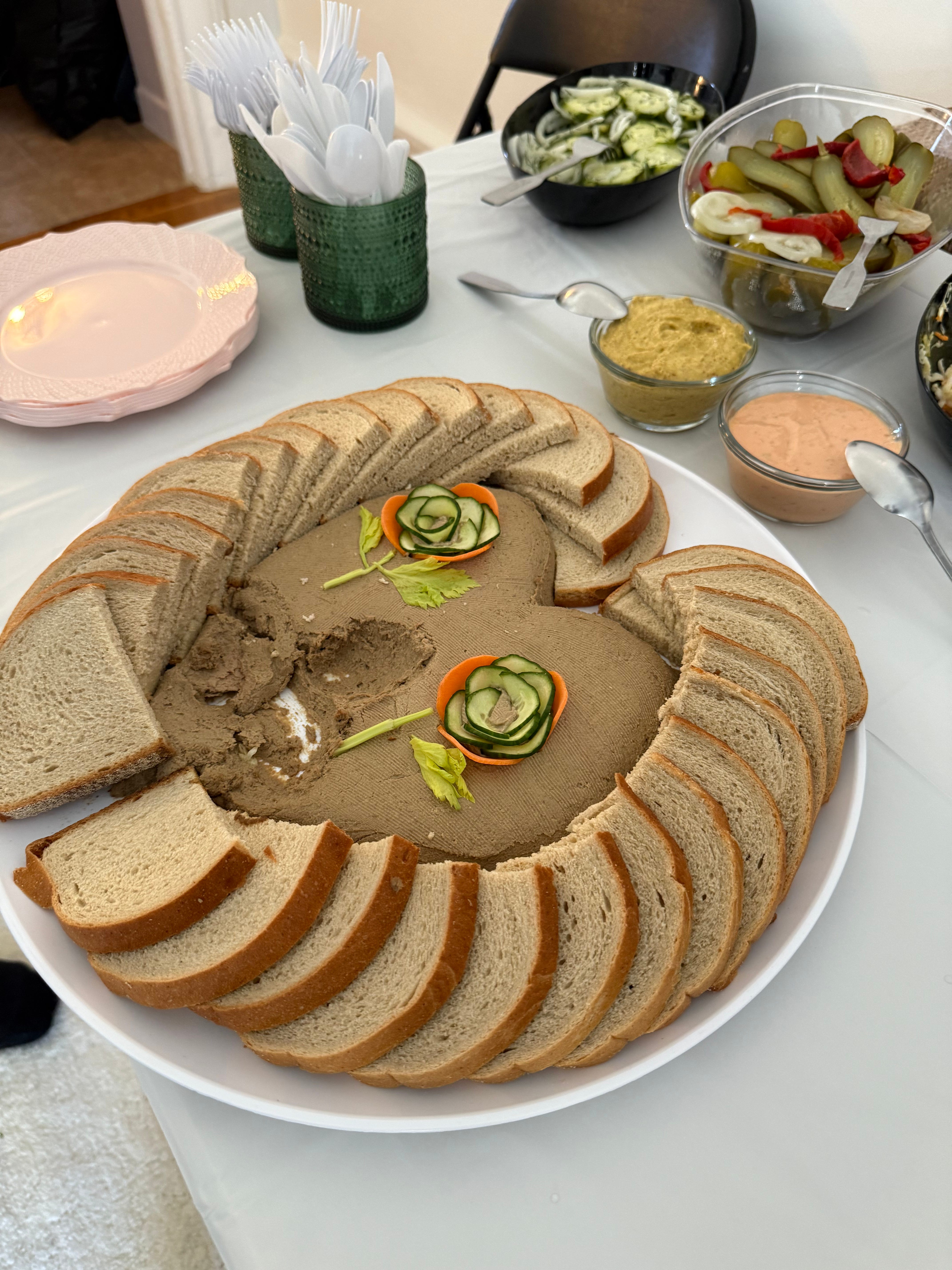
Wednesday before the Nosh, Nate and I sat shiva with a friend from New Hampshire, a New York native, whose father had passed away. We were coincidentally in town so we could pay our condolences in person. Food is central to any shiva, the ritual week of mourning after a death prescribed by Jewish law. Friends traditionally send complete meals, food, and especially baked goods to go with coffee so the mourning family doesn’t have to cook or leave the house. This shiva was catered by Second Avenue Deli. And in addition to a heart-shaped mold of chopped liver, the deli sent over platters of pastrami sandwiches. Although Nate and I were heading from shiva to dinner, we both had half a pastrami sandwich schmeared with mustard. It was so good.
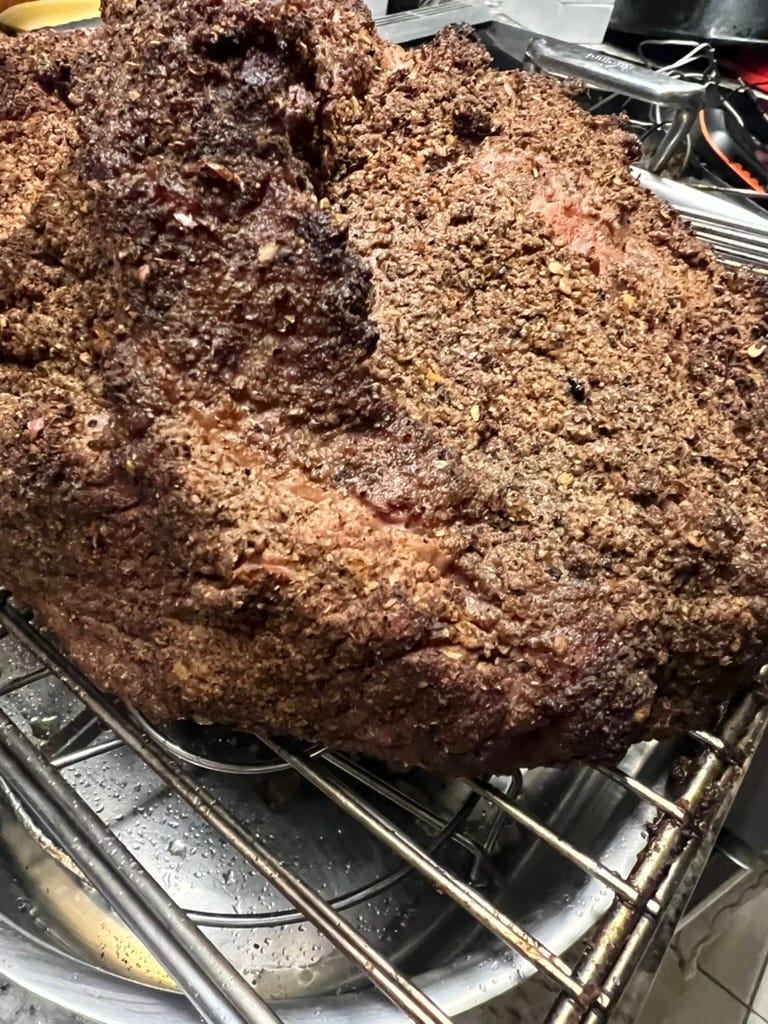
If you don’t live anywhere near Katz’s or Second Avenue Deli or anywhere famous for its pastrami, I’ve learned that’s it is possible to make a delicious pastrami at home. In fact, the few times I’ve done it, I’ve thought to myself that my pastrami might be even better than any I’d ever had. I wasn’t alone in that assessment; my guests agreed.
I ventured into the realm of pastrami by request of my sister Leslie, who was visiting and had a craving. I won’t lie and say it’s quick and easy to make. It’s not that difficult, but it requires several steps that take several days. It also requires a smoker. I can attest that after you do it once, the second and third times feel like much less of a production, in part I suspect because you know the payoff is worth it.
The process begins with the selection of good quality meat, usualy a whole brisket, both the point and the flat intact. Traditionally, pastrami was made from either the navel or the brust deckle (“chest cap” in Yiddish), fattier cuts of beef from the underside of the cow. Neither is available these days for retail. The extra fat layer in the brisket point assures a rich, fall-apart texture similar to the original. For extra-lean pastrami, slice it from the flat; for fatty, slice it from the point.
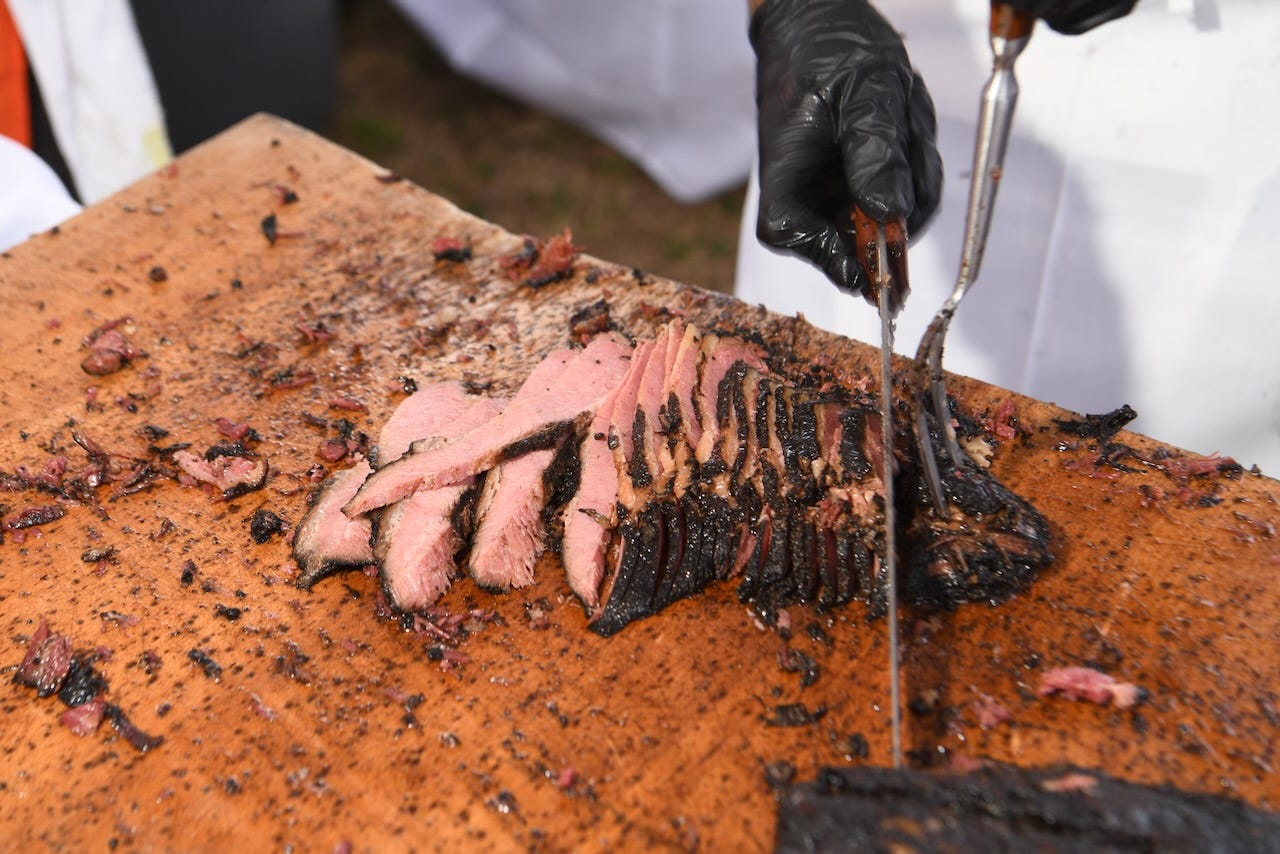
The brisket is trimmed and then brined in a seasoned bath of sweetened salt water for up to ten days. After a rinse, it’s covered in spices and set in a smoker for several hours to develop the characteristic pastrami flavor. The process can be stopped here and the brisket refrigerated or frozen until the day you want to serve. A final schvitz in a steam bath brings it to tenderness. I promise if you do what my recipe says, the result will be excellent and the effort will have been worth it.
The only ingredient you might not have on hand is the pink curing salt known as Prague Powder #1 or Instacure, which is a combination of table salt and sodium nitrate used to preserve meat that’s colored pink so you don’t mistake it for regular salt. It is available online or in specialty stores, particularly those that promote sausage making, such as Amish stores, butcher shops, or hunting supply stores. You can make a pastrami without it, but the color of the meat may be a less appetizing brown-grey rather than pink and it won’t be as juicy. It is still delicious.
Although Romanian in origin, I’m thinking of making a pastrami for the 4th of July as a way to insert a Jewish moment of reflection into this year’s celebration of America’s independence and as an acknowledgement of the contribution Jews have made to our food and culture. Pastrami is perfect for a picnic. With potato salad, coleslaw, corn on the cob, and plenty of mustard, it’s truly a great nosh.
RECIPE: Pastrami
Makes 10 to 14 servings, depending on how much you can eat
For the meat
1 whole brisket, point and flat, 12 to 15 pounds
For the cure
¾ cup kosher salt
1 cup dark brown sugar
4 cloves garlic, crushed but not peeled
2 tablespoons black or brown mustard seeds
2 tablespoons coriander seeds
2 tablespoons black peppercorns
1 tablespoon ground ginger
1 tablespoon allspice berries
1 ½ teaspoons Prague powder #1 or Instacure, aka pink curing salt (optional)
6 whole cloves
6 bay leaves
1 gallon warm water
For the spice rub
½ cup black peppercorns
⅔ cup coriander seeds
½ cup dark brown sugar
2 tablespoons sweet Hungarian paprika
1 tablespoon granulated garlic
1 tablespoon onion powder
2 teaspoons red pepper flakes
In a large basin or other container large enough to hold the brisket make the curing solution. Combine the salt, brown sugar, garlic coves, mustard seeds, coriander seeds, peppercorns, allspice, Prague powder, if using, cloves, peppercorns, and bay leaves. Pour in the gallon of warm water and whisk to dissolve the sugar and salt. Cool to room temperature. Make room in the fridge for the basin.
Meanwhile, trim any excess fat off the top of the brisket and from the middle of the point. Submerge the trimmed brisket in the brine, cover, and refrigerate for seven to ten days, depending on how thick it is, turning it over every other day so the cure penetrates the meat evenly. The brisket flesh should have firmed up and darkened in color.
When the meat is ready to smoke, prepare the spice rub. Coarsely grind the peppercorns and coriander seed and transfer to a small bowl. Add the brown sugar, paprika, granulated garlic, onion powder, and red pepper flakes, and stir to blend.
Remove the brisket from the brine and rinse under cold water. Remove any peppercorns or other spices that might have stuck. Pat dry with paper towel. Cover the entire surface of the brisket with the rub, pressing it into the fat and flesh so it forms a nice crust.
Bring the temperature of your smoker up to 225°F and fill the chip tray with applewood or another wood of preference. Insert a thermometer probe, if you have one, into the thickest part of the point and place the meat into the smoker. You want the internal temperature of brisket to come to 150°F., which should take about six hours or so. If you don’t have a probe, test it periodically with an instant-read thermometer after about 5 hours.
At this point you can cool the brisket to room temperature and refrigerate or freeze it until the day you want to serve it. Several hours before serving, bring the brisket to room temperature.
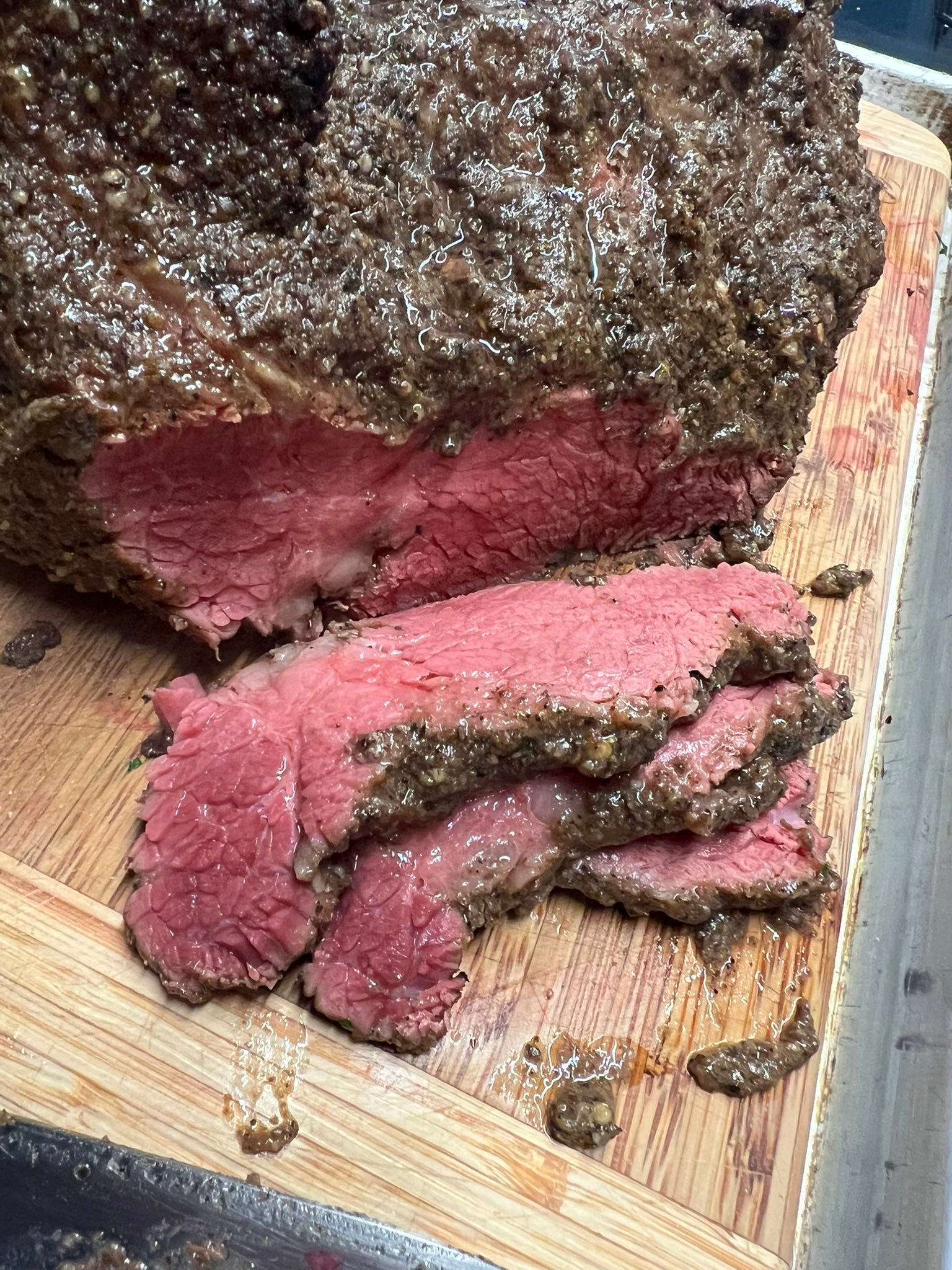
You can finish steaming the pastrami in the oven or on top of a stove. If using the oven, preheat it to 275°F. You need a roasting pan with a rack large enough to hold the brisket. Bring a large kettle of water to a boil. Place the smoked brisket on the rack in the roasting pan and fill it with at least ½-inch of boiling water, not touching the meat. Insert a thermometer probe, if you have one, back into the thick of the point. Cover the pan tightly with aluminum foil and place in the oven or over a low stovetop burner (or burners) so the brisket steams. You want the internal temperature to reach about 200°F. to 205°F., when the connective tissue and the flesh should be nice tender. It will take about 2 1/2 to 3 hours. Periodically check the water level and add more boiling water, if necessary.
Serve the pastrami hot or warm, thinly sliced against the grain, with plenty of mustard and pickles.
Mitchell! I just sent you a direct message here on Substack in the “Chat” tab in the “requests” section -Chef Harrison :)